



The Asset Set Begins with a Direction
AI media production is not simply a sequence of prompt requests. It is the coordinated creation of images, voice, and other media that should feel as though they belong to the same project. Asset generation means producing those individual materials; creative direction gives them shared purpose. For this lesson, the practical goal is to establish that direction, generate core assets, review them, and refine them without losing their identity.
Start with a concise brief that names the audience, intended use, subject, emotional effect, and non-negotiable traits. For example, a short educational campaign for urban gardeners might feature Mina, a community garden coordinator in her early thirties, with short dark curls, a green work jacket, and an observant, encouraging manner. The visual world could use fresh greens, warm natural light, and documentary-style framing. The voice could be calm and conversational, with clear pacing and restrained enthusiasm. These choices are specific enough to guide production but leave room for useful variation.
Separate fixed attributes from flexible ones. Mina’s appearance, role, and approachable tone are fixed; camera distance, background activity, and the exact wording of a line can vary when the assignment calls for it. This distinction prevents two opposite problems: every asset looking mechanically identical, or each asset drifting into a different campaign. Consistency means recognizable continuity, not repetition without purpose.
Build a Reference Before Generating Variations
Create a compact reference sheet before generating the final set. Include a subject description, a palette, a few composition principles, and voice and tone notes. For an image-led project, identify the subject’s defining visual markers, the desired lighting, the preferred level of background detail, and any elements to avoid. For audio, describe qualities a listener can judge, such as pace, warmth, energy, and formality. Avoid vague directions such as “make it professional”; explain what professional should sound or look like in this specific project.
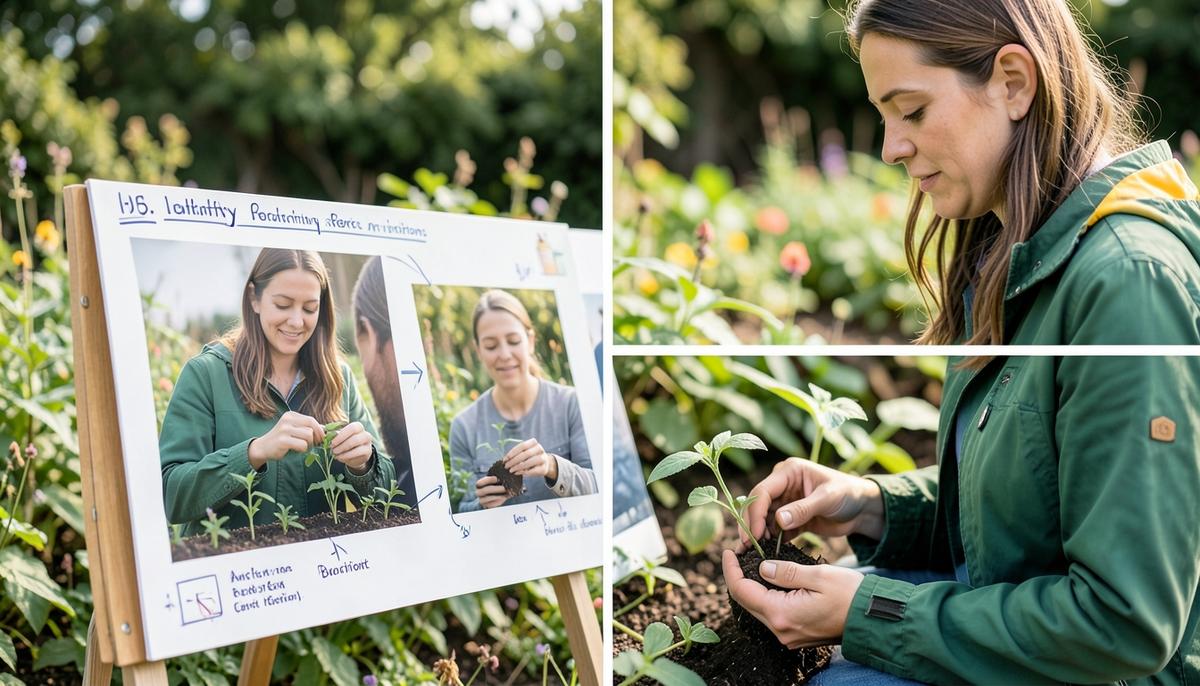
Generate a small range of candidate assets against the same reference. A hero image might show Mina examining seedlings at eye level, with the subject clearly separated from the garden behind her. A supporting image might show her hands transplanting a seedling, retaining the green jacket sleeve and natural-light treatment. The second image changes the framing and action while preserving visual clues that connect it to the first. A short narration can introduce the same subject with an encouraging, plainspoken tone rather than an unrelated, highly dramatic delivery.
Review Assets as a System
Review the set side by side, not only one asset at a time. First check identity: does the subject retain recognizable features, wardrobe cues, role, and mood? Then check composition: is the intended subject easy to find, is the focal hierarchy clear, and does the image leave appropriate space for any planned title or crop? Check color and light across the set. A supporting image may be brighter or more intimate, but a sudden shift from natural greens to glossy neon lighting needs a reason.
Review audio against the same direction. A voice can vary its inflection to make a key phrase clearer, but it should not suddenly shift from calm explanation to theatrical urgency unless the story calls for that change. Check intelligibility, pacing, energy, and emotional fit. If an audio asset is generated separately from the visuals, assess whether its language and delivery suit the depicted subject and intended audience. Do not assume that matching words alone makes an audio and image pairing coherent.
For example, imagine the hero image shows Mina in a practical green jacket, but the supporting image presents a glamorous studio portrait in a blue outfit. If the brief does not explain this change, the set reads as two different productions. The useful revision is not necessarily to regenerate everything: first identify which reference traits matter, then revise the outlying image or adjust the approved direction if the departure was intentional. Record the decision so later assets follow it.
Refine with Specific Feedback
Refinement works best when feedback points to an observable issue and a desired correction. “Make it better” offers no dependable criterion. “Keep Mina’s short curls and green jacket; reduce background clutter so her hands and the seedling remain the focal point” gives a clear target. For voice, “slow the opening slightly and keep the delivery warm rather than promotional” is more actionable than “sound nicer.” Apply one or two priority changes at a time, then check whether the revised asset actually solves the issue.
Compare before and after using the same criteria. Note what improved, what remained uncertain, and whether the change damaged something that was already working. A tighter crop might clarify an expression but remove useful context; a more energetic read might improve attention but weaken the intended sense of trust. Keep a version only when its benefit outweighs its cost. Preserve approved assets and reference notes so a later revision does not accidentally restore a rejected choice.
Not every difference is a defect. A hero image can establish the setting while a supporting image emphasizes detail. A voice can become more deliberate for an important instruction. The test is whether each variation supports the brief and remains compatible with the project’s fixed traits. If viewers could reasonably infer a different character, audience, or campaign from one asset, investigate whether the variation is intentional and sufficiently motivated.
Production Handoff and Self-Assessment
Before handoff, check that each asset has a clear role, a known status, and enough context for another collaborator to use it correctly. Identify which files are approved, which remain exploratory, and which reference decisions govern future generation. State any intended variation, such as a warmer color treatment for an outdoor closing scene. This prevents a collaborator from treating a deliberate choice as an inconsistency or copying an early experiment as final direction.
Use a short self-assessment. Can you describe the project’s audience and emotional aim in one sentence? Can you identify the subject’s fixed traits without relying on a single asset? Do images share a coherent approach to color, light, and hierarchy? Does the voice suit the same audience and tone? Can you name the specific issue that each revision addressed? If an answer is unclear, clarify the brief or the asset before expanding the set.
The central production skill is controlled coherence: generate enough variation to find useful options, then refine against explicit visual, vocal, and tonal criteria. A strong asset set is not merely attractive piece by piece. Its parts make a consistent promise to the audience, and each variation has a clear creative reason.
Lesson Checkpoint
Review what you learned and get feedback on your work.