



Introduction
High-performing TikTok ad creative is not simply a polished product video placed on a short-form platform. It is a business asset designed to earn attention quickly, communicate one valuable idea, and move the viewer toward a measurable action. The creative must work in a fast, competitive feed where users can swipe away immediately. This makes the first seconds, the clarity of the message, and the relevance of the story more important than production complexity.
The objective of this lesson is to build TikTok ads that feel native to the platform while still supporting a clear commercial goal. A strong creative should answer three questions quickly: Why should the viewer keep watching, why does this product matter to this person, and what should the viewer do next? These questions apply whether the campaign is designed to generate purchases, leads, app installs, or qualified traffic.
Building the Creative Around a Strong Hook
The hook is the opening moment that creates a reason to continue watching. It can be a customer problem, a surprising result, a direct statement, a visual demonstration, a comparison, or a question that reflects the target audience’s situation. For example, a skincare brand might begin with a close view of uneven skin and the statement, Many people use this product incorrectly. A productivity app might open with a screen showing an overloaded task list and the question, What if your morning plan took two minutes instead of twenty?
A useful hook is specific rather than broadly promotional. Statements such as Best product ever or You need this are usually weak because they do not provide a concrete reason to care. A stronger opening identifies a recognizable pain point or promises a relevant outcome without making an unsupported claim. The first visual should reinforce the opening words. If the voiceover describes a problem, show the problem immediately instead of opening with a logo or a slow product shot.
The hook should also match the audience’s level of awareness. A viewer who already understands the product category may respond to a comparison or a product benefit. A viewer who does not yet recognize the problem may need a relatable situation first. Before producing the video, define the audience, the problem, and the desired next action. Then write several hook options that approach the same value proposition from different angles.
Using Native Storytelling and Clear Video Structure
Native TikTok storytelling feels direct, personal, and easy to follow. It may use a creator speaking to camera, a customer demonstration, a product test, a behind-the-scenes sequence, a response to a common question, or a simple before-and-after explanation. Native does not mean careless. The video still needs intentional framing, understandable audio, readable captions, and a logical sequence. The goal is to reduce the distance between the brand and the viewer, not to reduce quality.
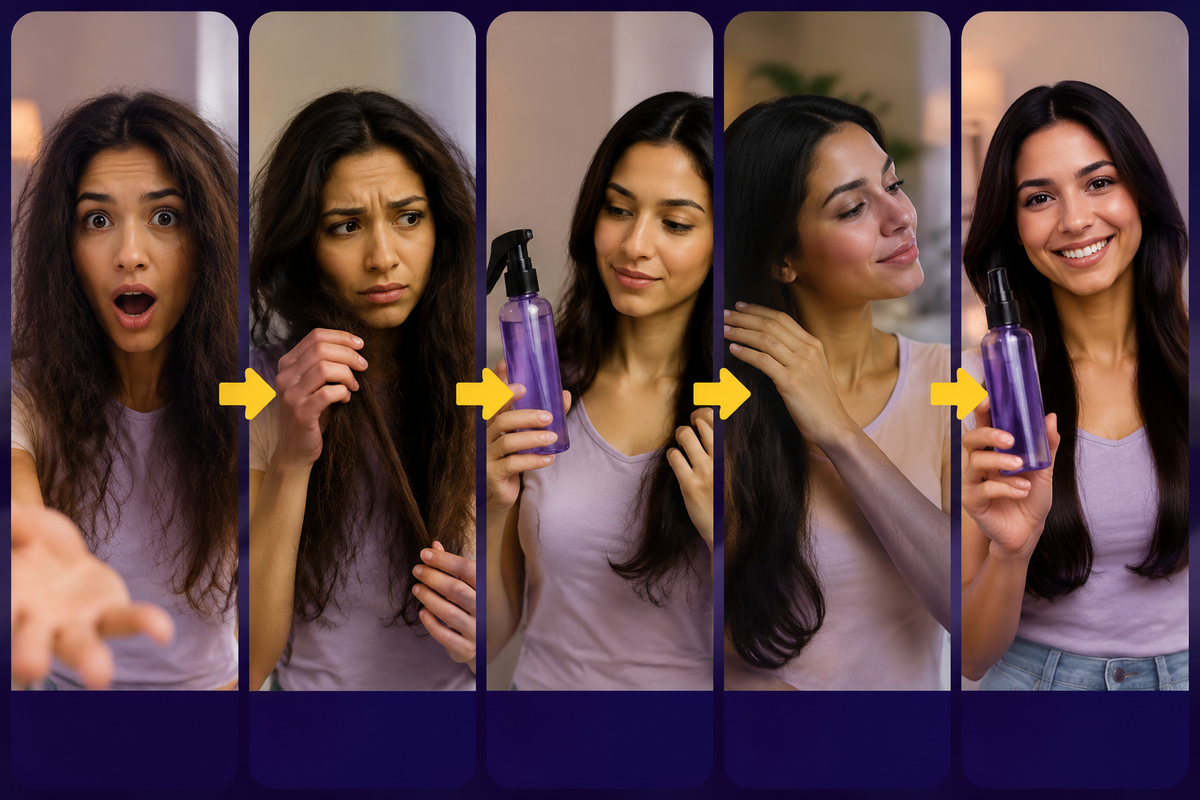
A practical structure is hook, problem, solution, proof, and call to action. The hook earns attention. The problem confirms that the video is relevant. The solution shows how the product or service addresses that problem. Proof can include a demonstration, customer experience, product detail, expert explanation, or visible result. The call to action tells the viewer what to do next. Not every ad needs equal time for each part, but the sequence should remain easy to understand.
For example, a meal delivery company could show a professional arriving home late, explain the difficulty of preparing dinner, demonstrate the ordering process, show the finished meal, and invite the viewer to view the weekly menu. A software company could show a sales manager searching through multiple spreadsheets, demonstrate one consolidated dashboard, display a reporting result, and direct viewers to request a product demo. In both examples, the story is based on a business problem rather than a list of product features.
Use vertical framing, strong visual contrast, and on-screen text that remains readable on a mobile screen. Keep important text away from interface areas where TikTok controls may appear. Captions should support the spoken message, not compete with it. Music and sound effects can improve attention, but the main message should remain understandable when the viewer is watching in a low-volume environment.
Making the Message and Call to Action Commercially Clear
A creative can be entertaining and still fail commercially if the message is unclear. Every ad should have one primary value proposition. This is the main reason the target customer should consider the offer. Supporting benefits may be included, but they should not force the viewer to interpret several competing messages. For a fitness service, the primary proposition might be guided workouts that fit a busy schedule. For a business software product, it might be reducing manual reporting time for small sales teams.
Translate features into customer outcomes. A feature describes what the product has; an outcome explains what the customer can do or achieve because of it. A storage feature becomes easier organization. A delivery feature becomes less time spent shopping. An analytics feature becomes faster decisions. The wording should be precise and credible. Avoid absolute claims, guaranteed results, or exaggerated comparisons unless the business can substantiate them and the platform’s advertising policies allow them.
The call to action should match the campaign objective and the viewer’s level of intent. A direct response ad may ask the viewer to shop now, start a trial, or complete an application. A consideration ad may ask the viewer to learn more, watch a demonstration, or compare options. The call to action should be visible in the spoken message, on-screen text, and final frame when appropriate. It should also set a realistic expectation. If clicking leads to a product page, the creative should not imply that the viewer is immediately receiving a personalized consultation.
Keep the landing experience consistent with the ad. If the ad promises a particular discount, product bundle, or use case, the destination should make that offer easy to find. Creative performance can be weakened by a mismatch between the promise in the video and the page reached after the click.
Creating Variations for Testing and Learning
One video is not a reliable test of a creative strategy. Build variations that change one meaningful element at a time when the goal is to identify what caused a performance difference. Examples include three different hooks with the same demonstration, two creators explaining the same benefit, different opening visuals, or two calls to action matched to different stages of intent. This creates more useful learning than changing the hook, offer, audience, music, and landing page simultaneously.
Organize variations by hypothesis. A hook hypothesis might be that a problem-focused opening will earn more attention than a product-focused opening. A proof hypothesis might be that a live demonstration will generate more engagement than a verbal claim. A messaging hypothesis might be that emphasizing time saved will outperform emphasizing price. Record the hypothesis, audience, offer, creative version, and launch date so the team can interpret results rather than relying on memory.
Use a balanced creative set. Include direct-response videos that make the offer and next step clear, educational videos that explain a problem or process, testimonial-style videos that provide social proof, and demonstration videos that show the product in use. The right mix depends on the business model, customer journey, and campaign objective. A premium service may need more trust-building content, while a simple impulse purchase may benefit from fast demonstrations and clear pricing.
Avoid producing superficial variations. Changing only the background color or adding a minor text change may not create a meaningful test. A useful variation changes the way the viewer understands the problem, benefit, proof, or next step. At the same time, do not create so many versions that the budget and delivery volume are spread too thin to produce interpretable results.
Measuring Creative Performance and Optimizing Decisions
Evaluate creative using metrics that correspond to its role in the funnel. Early attention signals may include video views, watch time, and the percentage of viewers who continue past the opening. Engagement metrics can indicate whether the content creates interest, but they are not automatically evidence of business value. For conversion campaigns, examine click-through rate, landing page behavior, cost per conversion, conversion rate, and return on ad spend together rather than selecting one metric in isolation.
A weak opening combined with a strong conversion rate among people who continue watching suggests that the offer may be relevant but the first seconds need improvement. Strong viewing behavior with weak clicks may indicate that the video is entertaining but does not make the benefit or next action clear. Strong clicks with weak conversions may indicate a landing page problem, an offer mismatch, low purchase intent, or unclear expectations set by the ad. These interpretations should be tested rather than assumed.
Use a disciplined optimization cycle. First, identify the weakest stage in the viewer journey. Next, form a specific hypothesis. Then create a focused variation, run it under a fair comparison, and review results after sufficient delivery. Keep the best-performing elements and develop new variations around them. Do not make decisions from a very small amount of data or stop a creative solely because one day was weak. Also monitor feedback, comments, policy issues, and signs of audience fatigue, because performance can decline when the same message is repeatedly shown.
The final quality check should confirm that the video has a clear hook, one primary value proposition, native storytelling, visible proof, readable text, an appropriate call to action, and a destination that matches the promise. Creative optimization is not a one-time production task. It is an ongoing process of converting customer insight into better messages and then using performance data to decide what to produce next.
Lesson Checkpoint
Review what you learned and get feedback on your work.