



Introduction
Generating a convincing sequence of AI video shots is not only a prompting task. It is a continuity problem. Each shot must preserve enough visual information from the previous shot for the viewer to believe that the same subject, place, action, and time are continuing. A clip can look attractive by itself and still fail when placed beside the rest of the sequence.
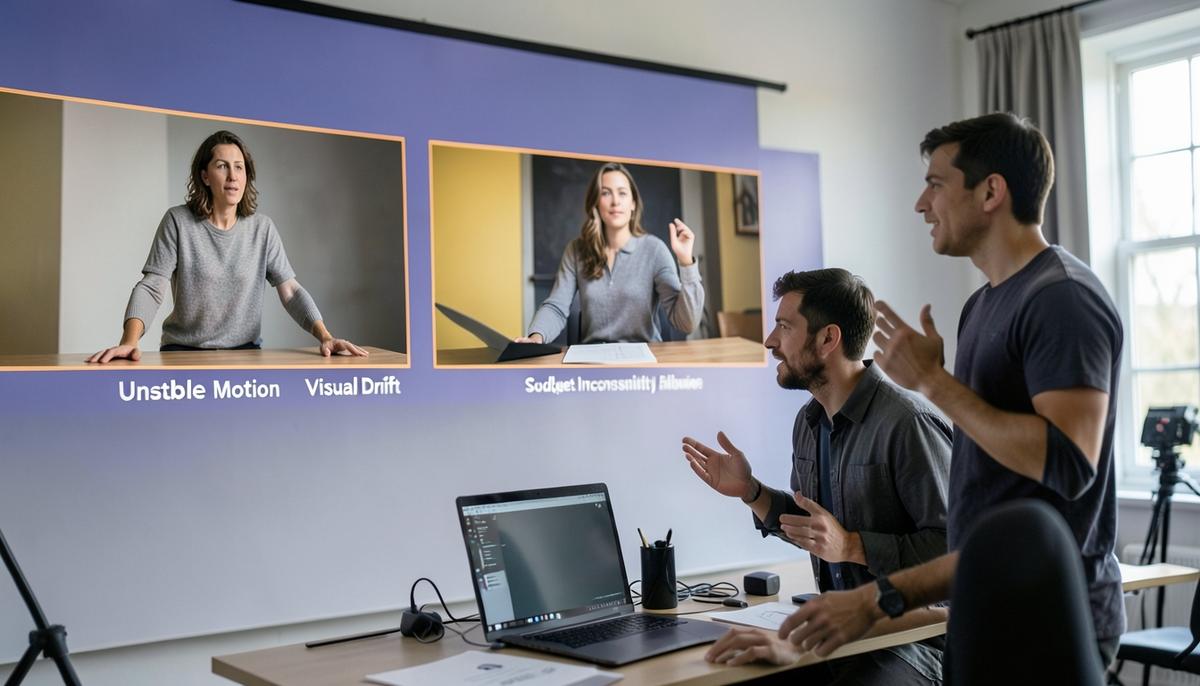
The most common continuity failures are unstable motion, visual drift, and inconsistent subjects. Unstable motion appears when limbs deform, objects jump, or the camera moves unpredictably. Visual drift occurs when colors, lighting, architecture, or spatial relationships gradually change. Subject inconsistency appears when a character's face, clothing, body shape, or props change between shots. The practical goal is not to eliminate every variation. It is to identify the dominant failure and revise only the variables responsible for it.
A reliable review begins by comparing shots as a sequence rather than judging each generation independently. Watch the transition several times without sound. First observe movement, then subject identity, then composition, lighting, and color. This order helps separate problems that may look similar at first glance.
Reading Continuity Failures
Unstable motion is primarily a temporal problem. The subject may move too quickly, perform several actions at once, or interact with an object that the model cannot track consistently. Typical symptoms include hands changing shape during a gesture, feet sliding across the ground, a moving vehicle bending between frames, or a camera that accelerates and stops without a believable reason. The more complex the movement, the more opportunities there are for temporal errors.
Visual drift is primarily a scene-control problem. The location may begin as a narrow blue hallway and end as a wide warm room. Shadows can move in a direction that contradicts the light source. A window, table, or doorway may appear in different positions, even though the camera has not clearly changed viewpoint. Drift is especially noticeable in establishing shots and long clips because the viewer has more time to compare the environment.
Inconsistent subjects are primarily an identity problem. A character may retain a similar silhouette but lose the details that make the person recognizable. Hair length, jacket color, glasses, age, facial proportions, and carried objects are frequent points of failure. A subject can also become inconsistent when the prompt describes appearance with vague terms such as stylish person or young traveler instead of stable, observable attributes.
Diagnosing Before Revising
Start with a continuity table in your review notes. For each shot, record the subject position, facing direction, key action, camera angle, lens impression, dominant colors, light direction, environment anchors, and important props. Compare the end of one shot with the beginning of the next. The purpose is not administrative completeness. It is to reveal which element changed without a storytelling reason.
Use the smallest useful unit when diagnosing. If the problem appears inside one shot, inspect the exact moment where it begins. If the shot is stable but the cut feels wrong, compare the last two seconds of the first shot with the first two seconds of the second shot. A continuity issue at the cut may be caused by mismatched screen direction, a different subject pose, or a camera position that does not provide a plausible visual handoff.
Separate intentional change from accidental change. A character turning around should change orientation, but the coat should not change color. A camera moving from a wide view to a close view should change the visible amount of background, but the window should not move to the opposite wall. This distinction prevents unnecessary revisions that remove useful storytelling variation.
A useful priority rule is to fix the failure that attracts attention first. If viewers notice a face changing, preserve identity before refining color. If the character is stable but the action looks physically impossible, simplify the motion before adjusting the environment. If every individual frame looks acceptable but the sequence feels disconnected, focus on composition and transition rather than adding more appearance detail.
Targeted Revisions for Motion
When motion is unstable, reduce the number of simultaneous actions. Replace a complex instruction such as a person running down stairs, turning, opening a door, and looking back with one dominant action. A shot showing the person reaching for the door handle may be more usable than a dramatic shot that attempts to complete the entire movement.
Shorter actions are easier to control than continuous choreography. Divide a sequence into clear beats: the subject approaches, pauses, reaches, and then opens the door in a separate shot. Each beat creates a natural edit point and gives the model fewer temporal relationships to maintain. Hold the camera still or use one simple camera movement while the subject performs the action. A complicated camera move combined with complex body movement increases instability.
Revision should also address speed and physical constraints. Specify a slow, deliberate turn rather than a rapid spin. Keep both feet grounded when the subject is standing. Describe the object being used and how it is held. For example, a hand resting on a fixed railing provides a clearer physical relationship than a hand gesturing near an unspecified surface. These details give the motion a stable anchor.
After revision, compare the first and last moments of the shot. The subject should begin and end in positions that can connect to neighboring shots. A technically smoother clip is not necessarily better if it ends with an unusable pose or reverses the intended screen direction.
Targeted Revisions for Identity and Setting
For subject continuity, create a compact identity description and repeat only the attributes that must remain stable. Include observable details such as hair shape, clothing colors, distinctive accessories, approximate age, body type, and one recognizable prop. Keep the wording consistent across related shots. Changing the description from charcoal coat to dark gray jacket may seem harmless, but repeated small changes can encourage visual drift.
Use reference images when the production workflow supports them, but do not assume that a reference image solves every continuity issue. The reference should clearly show the attributes that matter for the current shot. A full-body reference is useful for costume and silhouette. A closer reference is more useful for facial identity. If the shot changes lighting or angle significantly, review whether the important features remain visible and interpretable.
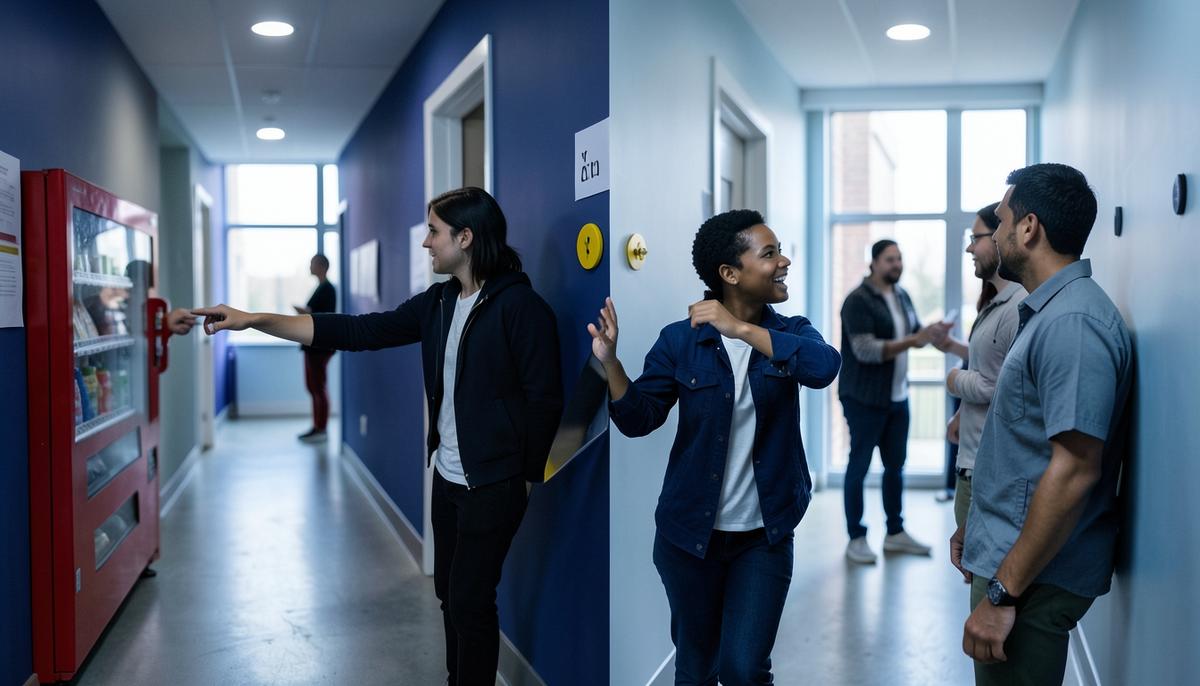
For setting continuity, identify three to five environmental anchors. These might be a red vending machine on the left, a window behind the subject, a concrete floor, and cool overhead lighting. Preserve these anchors while allowing less important background details to vary. Trying to describe every object can create a crowded instruction that is less stable than a focused description.
Match color and light before chasing exact architecture. Consistent exposure, shadow direction, and palette often make two slightly different backgrounds feel like the same place. If the first shot uses soft morning light and the next uses hard orange sunset light without a narrative reason, the sequence will feel discontinuous even when the furniture is similar.
Reviewing the Revised Sequence
Evaluate revisions at three levels. At the frame level, check for deformation, flicker, and sudden attribute changes. At the shot level, check whether the movement has a clear beginning and end, whether the composition supports the intended action, and whether the camera behavior is believable. At the sequence level, check screen direction, eyelines, subject scale, lighting, color, and the visual handoff between cuts.
Do not revise every visible imperfection at once. Change one main variable, generate a small set of alternatives, and compare them against the previous version. If you simplify motion and alter the wardrobe in the same revision, you may not know which decision improved or damaged continuity. Controlled iteration produces better evidence and reduces prompt drift.
Use a practical acceptance test: can a viewer identify the same subject, understand the action, locate the subject in space, and believe that time is progressing continuously? If the answer is yes, minor texture changes may be acceptable. If the answer is no, return to the dominant failure rather than adding descriptive language indiscriminately.
Summary
Continuity is maintained through diagnosis and targeted revision. Unstable motion usually requires simpler actions, slower movement, clearer physical anchors, or a restrained camera. Visual drift requires stable environmental anchors, consistent light direction, and a controlled palette. Subject inconsistency requires repeatable identity attributes and references that show the features needed for the shot.
The strongest workflow treats each generation as evidence. Observe exactly where the sequence breaks, identify whether the cause is temporal, spatial, or identity-related, and revise the smallest set of variables that can address it. A successful shot is not merely beautiful in isolation. It begins, develops, and ends in a state that the surrounding shots can support.
Lesson Checkpoint
Review what you learned and get feedback on your work.